

Welcome to Mystics Reading Society! We’re currently slow reading When Things Fall Apart by Pema Chodron. Subscribe to our newsletter to join the journey.
Dear Mystic,
This week, we’re studying Chapter 2 of When Things Fall Apart by Pema Chödrön. In this chapter—also titled When Things Fall Apart—Chödrön shares a couple of stories from her own life when everything truly unraveled.
She then offers Buddhist wisdom for how to meet these moments—not with solutions or certainty, but with tenderness, honesty, and the willingness to simply be with what is.
These can be painful times, yes. But they can also be moments of profound transformation—when the path isn’t about finding answers, but about seeing with new eyes.
Whether you’ve read the chapter or are just curious about this journey, you’re welcome here. There’s wisdom in simply being present with these ideas.
Below, you’ll find:
✨ A personal reflection about what the chapter brought up for me
🌀 A close reading of one quote to gently explore a concept from the chapter
🖋️ Reflection questions for journaling or discussion
When you’re done reading, I’d love to hear from you. Share your thoughts in the comments—I’d be honored to walk this journey beside you.
—Emma
✨ Personal Reflection
At the start of Chapter 2, Chödrön describes taking on a leadership role at Gampo Abbey, a Buddhist monastery in Nova Scotia. It had been a long-held dream of hers to go there. But when she arrived, everything fell apart.
“Everything that I had not been able to see about myself before was suddenly dramatized. As if that weren’t enough, others were free with their feedback about me and what I was doing. It was so painful that I wondered if I would ever be happy again. I felt that bombs were being dropped on me almost continuously, with self-deceptions exploding all around.”
She shares how her approach to directing the abbey didn’t suit everyone, and how this role forced her to let go of the version of herself she’d always believed in.
I’m relating to this a lot right now. A little over a year ago, one of my best friends and her two kids moved in with me and my husband as she navigated a divorce.
Overnight, we went from a household of two (plus our pet rabbit) to a family of five. And wow—going from choosing not to have children to suddenly living with a family in our home activated a lot of my own “unfinished business,” as Chödrön would say.
I won’t go into more detail, because it’s personal for everyone involved. But suffice it to say, I feel this quote from the chapter in my bones:
“Being there was an invitation to test my love of a good challenge, because in the first years it was like being boiled alive.”
Same, girl. Same.
There’s been beauty and joy in this season of my life. Some of it has even felt like dreams fulfilled. But without realizing it, I stepped into the roles of household manager and emotional regulator—roles that quietly unraveled the identity I thought I had.
Chödrön writes:
“I had always thought of myself as a flexible, obliging person who was well liked by almost everyone. I’d been able to carry this illusion throughout most of my life. During my early years at the abbey, I discovered that I had been living in some kind of misunderstanding. It wasn’t that I didn’t have good qualities, it was just that I was not the ultimate golden girl.”
I feel this deeply. I also thought I was endlessly easygoing. But it turns out, I get overwhelmed. I get irritated. And I need a lot more space and boundaries than I ever imagined.
And the hardest part? When those needs started to surface, I didn’t welcome them. I resisted them. I felt a kind of internal shame or rejection—like I wasn’t supposed to be this way. What happened to the easygoing Emma—the one who was supposed to be cool with messes, noise, and other people’s lives? What happened to the “good” auntie and friend?
I really thought I had failed, but here’s the thing: I didn’t fail. I didn’t do it wrong. This year has pulled back the veil. It’s shown me where I was still living by childhood survival rules—rules that told me I had to be endlessly flexible and accommodating in order to be safe.
I’ve come face-to-face with parts of myself I used to avoid or deny. I’ve watched trauma patterns I thought I had healed come roaring back in new ways. And while that’s been hard, it’s also been illuminating. I’m learning how to hold those parts with care. I’m learning to tell the truth about who I am and what I need.
This hasn’t been the year I became my “best self,” but as things fell apart, maybe it’s been the year I became my truest one.
🌿 The Heart of the Teaching
Falling apart doesn’t mean you’ve failed—it might mean you’re finally seeing clearly. And there’s a kind of grace in that.
This chapter feels, to me, like the heart of the whole book. It’s not just about what happens when life unravels—it’s about how we meet ourselves in the unraveling. It’s about truth-telling, tenderness, and the transformation that can emerge when we let things fall apart without rushing to fix them.
There’s one quote from the chapter that especially captured this for me—a line I’ve been sitting with all week. Let’s take a closer look at it together.
🌀 A Close Reading
Each week in our journey through When Things Fall Apart, I’ll choose one quote from the chapter that feels especially alive—something to slow down with, turn over, and let speak to us. Here is this week’s quote:
“The off-center, in-between state is an ideal situation, a situation in which we don’t get caught and we can open our hearts and minds beyond limit.”
Chödrön is describing those middle moments—the ones when you’re not who you used to be, and not yet who you’re becoming. Our instinct is often to reach for something solid. But the real invitation is to stay here. To be present in the discomfort, the uncertainty, the ache.
She writes that it’s essential to have tenderness with ourselves in these times. A teacher once told her:
“When you have made good friends with yourself, your situation will be more friendly too.”
Buddhism teaches that there’s no final answer in the unraveling, and the in-between is actually sacred ground. When we stop trying to fix or force, we might begin to soften. Our hearts and minds begin to shift.
For me, this rings true. As this year has unfolded, I’ve seen parts of myself I didn’t want to see, and I’ve asked more questions than I’ve answered:
What of this is a trauma wound clouding my perception?
What of this is a boundary I need to set?
What of this is something I can let go, without needing to change or fix?
After separating from my family of origin years ago, I never imagined I’d land back in another family system—with all its blessings and chaos. And yet here I am—living in a house full of complexity, surprises, and sacred mess.
But clarity is coming—not through control or perfection, but through tenderness and honesty. Slowly, I’m learning that the parts of me I once judged aren’t bad at all. They’re simply the parts that have needs, and they’re asking for care. Asking to be seen. The falling apart has given me eyes to recognize this, and that, to me, feels like holy ground.
What I’m learning from this quote is that, for much of this year, I’ve wished I didn’t still have to learn—painfully—that my trauma is alive and active within me. I’ve wanted to just be chill and happy and done with this particular season of my life.
But I’m starting to see the blessing in “the off-center, in-between state.” And as I begin this new chapter of recovery, in small moments, I’m not getting caught. Slowly, here and there, my heart and mind are opening beyond their limits.
✨ Other Quotes That Spoke to Me
Here are a few more quotes from the chapter that stayed with me—each one a small lantern for the path. You might find that one of them speaks to exactly where you are right now.
“When things are shaky and nothing is working, we might realize that we are on the verge of something.”
“Things falling apart is a kind of testing and also a kind of healing. We think that the point is to pass the test or to overcome the problem, but the truth is that things don’t really get solved. They come together and they fall apart. Then they come together again and fall apart again. It’s just like that. The healing comes from letting there be room for all of this to happen: room for grief, for relief, for misery, for joy.”
“Letting there be room for not knowing is the most important thing of all.”
🖋️ Reflection Questions
What part of your life feels like it’s “falling apart” right now? What are you being invited to see or feel in that space?
How do you usually respond to discomfort or uncertainty? What might it feel like to simply stay with what is—without needing to fix it?
What would it look like to bring tenderness to the parts of yourself that feel cranky, messy, or not-so-evolved right now?
🌿 A Blessing for the Path
Whatever you’re walking through this week, I hope this chapter and these reflections offer you a little more space, a little more compassion, and a little more room to breathe.
If you feel called, try this: place a hand on your heart, close your eyes, and take three slow breaths. Whisper to yourself: “It’s okay to not know. I’m allowed to be here.”
You haven’t failed. You’re just seeing clearly, and in that tender unraveling, something true is beginning.
✨ Ready to Go Deeper into the Magic?
The free version of Mystics Reading Society offers weekly letters to guide you through mystical books, reflections, and spiritual exploration. But if you're feeling the call to deepen your practice there’s a sacred space waiting for you.
For $8/month, paid subscribers receive:
🌑 Moon Magic Oracle Pulls
Receive personalized oracle card reflections at each new and full moon, with gentle prompts to help you align with the lunar cycle. These are small, potent moments of guidance to keep your intuition and inner life in rhythm with the cosmos.
🌿 The Tiny Guidebook for Practical Mystics
A beautifully designed monthly PDF filled with seasonal rituals, journaling prompts, and mystical tools to help you bring your spiritual path into everyday life. Think: a pocket-sized grimoire of nourishing magic.
✨ Plus, gain instant access to the full archive of past guidebooks when you subscribe—an ever-growing library of spiritual inspiration at your fingertips.
💌 A Quiet, Sacred Chat Space
There’s a private space available if you ever want to reach out, share insights, or say hello. Right now, it’s quiet—like a clearing in the woods—but the invitation is open if and when you feel called to connect.
🕯️ Seasonal Ritual Invitations
Join us for gentle, intentional gatherings on the solstices and equinoxes—rituals designed to help you honor the turning of the wheel, reconnect with yourself, and mark the sacred rhythms of your unfolding journey.
This space isn’t loud or busy. It’s intentional. It’s rhythmic. It’s here for those who crave depth, quiet magic, and meaningful support on the mystical path. The cauldron is warm. The light is low. The circle is forming—slowly and with care. Come closer if you feel called. 🌙
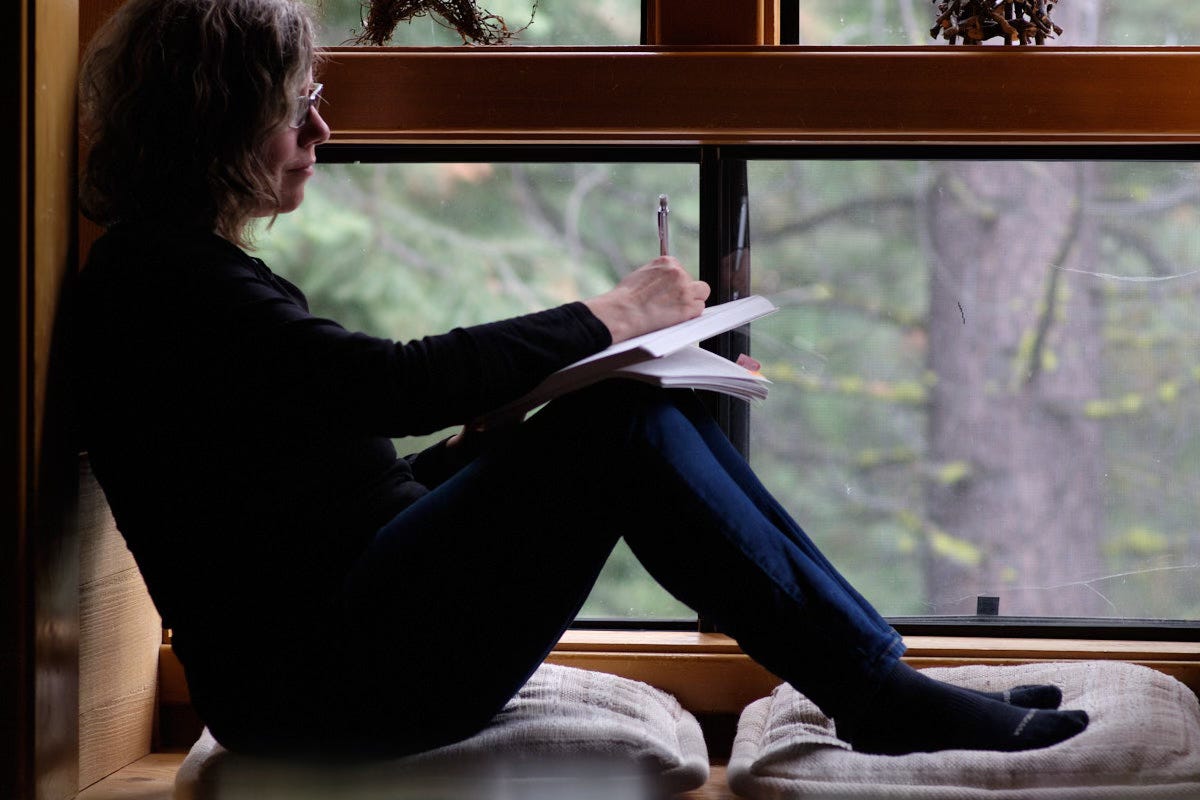
Hi, I’m Emma! I’m a reader and writer living in the mossy woods of the Pacific Northwest. I created Mystics Reading Society as a welcoming space where books, personal growth, and magic intertwine. Here, we explore transformative reads while creating a supportive community for those walking their own mystical, sovereign path.
If you also love to read cozy books, don’t miss my other bookish newsletter: Sleuth, Hero, Alien—for fans of cozy mysteries, charming sci-fi, and cozy fantasy. Read my latest post: Witchy Tea Reads for Your TBR
Disclaimer: This blog is a resource guide for educational and informational purposes only and should not take the place of hiring a life coach, a therapist, or of seeking medical attention. No information on this blog creates a coach-client relationship between us. You are fully responsible for the decisions and actions you take in regard to your life and affairs
Thanks so much for making these reading guides, I've been really enjoying delving into these themes so far!
I did feel a little bit conflicted about this chapter. I work with chronically ill patients (and am chronically ill myself), and especially in the anecdote about the AIDS patient I recognised a kind of tendency many of us have to force ourselves to think in silver linings when times are hard. This can also be enforced by our surroundings, when we don't have meaningful connections with people who allow us to mourn the negatives sometimes (that's what toxic positivity is, effectively). Perhaps in the case of a terminal illness, this is not so problematic, as you might as well enjoy the limited time you have left, but in the case of chronic illness I've often seen that this attitude can be used to push away justified feelings of grief, which then bubble up later, often much amplified compared to if they'd been allowed to exist earlier on.
Also in my work I often come across extremely ill patients, who are in constant pain. For them 'sitting with discomfort' is not an option as it is agony. For them, distraction or sedation from their symptoms to achieve a level of comfort they can live with is the best possible outcome that can be achieved. I know these are huge outliers compared to most of us, but I always find it important to bring this up, as people sometimes struggle to realise that not all hardship can be managed in the same way.